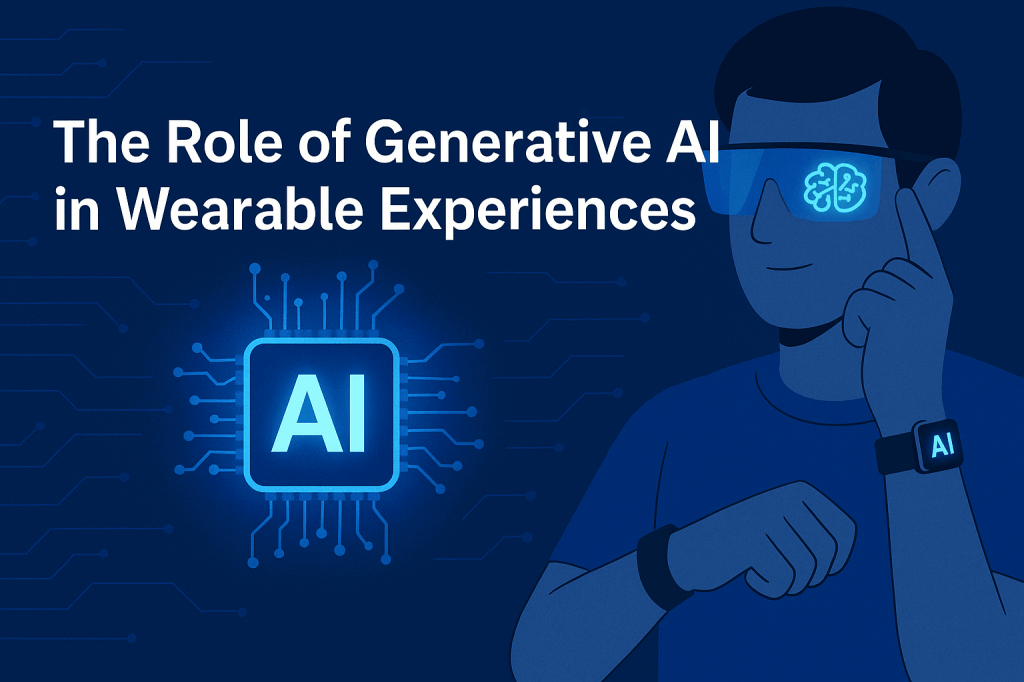
Wearable technology has rapidly evolved from simple fitness trackers and pedometers to sophisticated smart devices that seamlessly integrate into our daily lives. Today, wearables include smartwatches, smart glasses, AR and VR headsets, and even intelligent clothing that can monitor health metrics or interact with digital environments. These devices are no longer limited to tracking steps or heart rates; they actively engage with users, provide personalized insights, and enhance human interaction with technology.
One of the most exciting advancements in this domain is the integration of generative artificial intelligence, or generative AI. Unlike traditional AI systems that focus on analyzing data or predicting outcomes, generative AI has the ability to create entirely new content, such as text, images, audio, and even video. This means wearable devices can now offer adaptive, intelligent, and immersive experiences that are tailored specifically to individual users.
Generative AI enables wearables to understand context, anticipate needs, and interact in real time, transforming them from passive devices into proactive companions. For instance, a smartwatch equipped with generative AI can create personalized workout plans, suggest mindfulness exercises based on stress levels, or even generate immersive AR experiences for entertainment or education.
The goal of this article is to explore the role of generative AI in enhancing wearable experiences. We will examine how this technology is applied across various domains such as health, fitness, AR/VR, personalization, and accessibility. Additionally, we will discuss the challenges, future trends, and the significant role AI companies play in driving innovation in wearable technology.
Generative AI: An Overview
Types of Generative AI
Generative AI refers to a class of artificial intelligence systems designed to create new content rather than just analyze existing data. These systems have advanced rapidly in recent years and are now being integrated into wearable technology to enhance user experiences. There are several types of generative AI, each with unique applications for wearables.
- Text-based AI: This type of AI is capable of understanding and generating human-like text. In wearables, text-based AI powers conversational voice assistants, smart notifications, and real-time feedback. For example, a smartwatch can respond intelligently to user queries, provide explanations about health metrics, or even generate motivational messages during a workout.
- Image and Video Generation: Generative AI can create realistic images and dynamic visual content. In the context of wearables, this enables augmented reality (AR) and virtual reality (VR) applications to produce immersive environments that adapt to user actions in real time. Users can experience lifelike gaming worlds, interactive training simulations, or educational AR overlays tailored to their surroundings.
- Audio-based AI: This AI can generate soundscapes, speech, and music that are personalized for the user. Wearable devices can use audio-based AI to provide contextual alerts, modify notification sounds based on the environment, or create calming soundscapes to improve focus or relaxation. For example, a headset could generate a custom meditation soundtrack based on the user’s stress levels detected from physiological sensors.
Core Capabilities Relevant to Wearables
The unique features of generative AI make it particularly powerful for wearable technology. Its ability to create content in real time, provide predictive insights, and deliver highly personalized experiences opens up numerous possibilities for enhancing the value and functionality of wearable devices.
- Real-time Content Generation: Generative AI enables wearables to provide instant and contextually relevant content. For instance, a smartwatch can generate a customized fitness recommendation during exercise or an AR headset can overlay dynamic visual guides in response to user movement.
- Predictive Analytics: Wearables can analyze historical data combined with AI predictions to anticipate user needs. This might include detecting early signs of fatigue, suggesting breaks, or alerting users to potential health issues before they occur. Predictive AI allows devices to be proactive rather than reactive, enhancing user safety and convenience.
- Personalization: Generative AI can learn from individual user behavior, preferences, and physiological metrics. This means wearable devices can adapt their interface, notifications, recommendations, and even entertainment options to suit each user uniquely. Personalization ensures a more intuitive and engaging experience, making the device feel like a personal assistant rather than a static tool.
Overall, the combination of these capabilities allows wearables to move beyond mere tracking devices and become intelligent companions that actively improve daily routines, enhance productivity, and promote well-being. As generative AI continues to advance, its integration into wearable technology will expand, creating richer, more immersive, and more helpful experiences for users.
Applications of Generative AI in Wearable Experiences
Health and Fitness
One of the most impactful applications of generative AI in wearable technology is in the health and fitness domain. Traditional wearables track basic metrics such as steps, heart rate, or calories burned. Generative AI takes this a step further by actively generating insights, recommendations, and adaptive programs tailored to individual users.
- Personalized Workout Plans: Generative AI can analyze data from wearable sensors to create workout routines that match the user’s current fitness level, goals, and progress. For instance, a smartwatch might generate a running schedule that adapts in real-time if the user is overexerting or not achieving target heart rate zones.
- Predictive Health Monitoring: Continuous monitoring of physiological metrics such as heart rate, sleep patterns, and stress levels allows generative AI to detect early signs of potential health issues. The device can generate alerts or actionable suggestions, helping users take preventive measures before problems escalate.
- Dynamic Nutrition and Lifestyle Recommendations: Wearables can create personalized diet plans, hydration reminders, and lifestyle suggestions based on real-time activity and biometrics. For example, if a wearable detects fatigue due to insufficient sleep, it can suggest rest periods or calming exercises to improve recovery.
Augmented and Virtual Reality
Generative AI is transforming AR and VR experiences by enabling dynamic, adaptive, and immersive content creation. Wearable devices such as AR glasses and VR headsets can deliver personalized experiences that respond to user actions and context.
- Dynamic AR Overlays: Generative AI can produce real-time visual content overlaid on the physical environment. Examples include navigation aids, interactive educational content, or gaming elements that adapt based on the user’s movement and surroundings.
- Immersive VR Worlds: In VR applications, AI can generate interactive virtual environments that respond to user interactions. This allows for realistic training simulations, entertainment experiences, or social interactions in virtual spaces.
- AI-Generated Avatars: Generative AI can create realistic avatars and interactive characters that respond intelligently to users. This enhances gaming, virtual meetings, and educational applications, making interactions more engaging and human-like.
Personalization and Adaptive Experiences
Wearables equipped with generative AI provide highly personalized experiences that adapt to each user’s habits and preferences. This goes beyond standard customization, allowing devices to anticipate needs and deliver relevant content.
- Smart Notifications: Generative AI enables wearables to deliver notifications intelligently based on context. For example, a smartwatch can suggest a short break after detecting prolonged inactivity or alert a user to hydrate after an intense workout session.
- Adaptive Interfaces: Devices can dynamically adjust interface layouts, features, and accessibility options depending on usage patterns and user preferences. This ensures a more intuitive and efficient interaction, reducing cognitive load and improving usability.
Accessibility and Assistance
Generative AI is also making wearable technology more inclusive and accessible. Devices can assist users with disabilities, providing adaptive support tailored to individual needs.
- Voice and Gesture Recognition: Generative AI allows wearables to understand and interpret spoken commands or subtle gestures, enabling hands-free operation. This is especially beneficial for users with mobility challenges, enhancing independence and convenience.
- Adaptive Feedback Systems: Wearables can provide real-time guidance to visually or hearing-impaired users. This may include audio descriptions of surroundings, haptic feedback for alerts, or visual cues to support navigation and interaction with the device.
In summary, generative AI significantly expands the capabilities of wearable devices. By creating adaptive, personalized, and immersive experiences, wearables move beyond passive tracking tools and become intelligent companions that enhance health, productivity, accessibility, and entertainment. These applications demonstrate the transformative potential of AI in shaping the next generation of wearable technology.
Challenges and Considerations
While generative AI brings immense potential to wearable technology, there are significant challenges and considerations that must be addressed to ensure these devices are safe, reliable, and effective. Developers, manufacturers, and users need to understand these limitations and implement solutions to mitigate potential risks.
- Privacy and Data Security: Wearable devices collect vast amounts of personal and sensitive information, including biometric data, health metrics, location tracking, and behavioral patterns. If this data is mishandled, it can lead to privacy breaches, identity theft, or misuse of personal information. Strong encryption, secure data storage, anonymization techniques, and strict access controls are critical to protecting user privacy. Users must also be informed about what data is collected and how it is used to maintain trust.
- AI Accuracy and Reliability: Generative AI systems, while powerful, are not infallible. Predictive health analytics, for example, may occasionally produce incorrect recommendations or alerts. Inaccurate insights can potentially result in health risks, reduced user confidence, or poor decision-making. Continuous model training, rigorous testing, and validation of AI algorithms are essential to ensure accuracy and reliability in real-world applications.
- Integration with Hardware: Wearable devices have inherent hardware limitations, including small form factors, limited processing power, battery constraints, and storage capacity. Generative AI models often require substantial computational resources, which can strain these devices. To overcome these challenges, manufacturers may use lightweight AI models, edge computing, or cloud-based processing. Optimizing AI algorithms for low-power devices ensures smooth performance without draining battery life or affecting user experience.
- Ethical and Bias Concerns: AI models can unintentionally incorporate biases based on the training data used. In the context of wearables, this could lead to inaccurate health insights for specific demographics or biased personalization features. Manufacturers must ensure AI fairness, regularly audit models for biases, and include diverse datasets to create inclusive experiences for all users.
- User Adaptation and Trust: Introducing generative AI into wearables may require users to adapt to a new level of interaction. Users may be hesitant to trust AI-driven recommendations, especially when it comes to health or personal data. Transparent explanations of AI decisions, intuitive interfaces, and gradual user onboarding can help build trust and encourage adoption.
Addressing these challenges is crucial for the successful integration of generative AI into wearable technology. By ensuring privacy, accuracy, ethical practices, and effective hardware integration, developers can maximize the benefits of AI while minimizing risks. These considerations not only protect users but also pave the way for wider acceptance and adoption of intelligent wearable devices in everyday life.
Future Outlook
Enhanced Personalization
The future of wearable technology is moving toward unprecedented levels of personalization, powered by generative AI. Wearable devices will not just respond to user commands but anticipate needs based on patterns detected from daily activities, physiological metrics, and behavioral data. For example, a smartwatch could suggest an optimal workout routine before the user even starts exercising or adjust reminders and alerts based on current stress levels or workload. This anticipatory capability will transform wearables into proactive companions that guide users in real time, enhancing productivity, health, and overall well-being.
Seamless Human-AI Interaction
Generative AI will enable more natural and seamless interaction between humans and wearable devices. Future wearables will move beyond simple notifications and basic data tracking to providing interactive, context-aware assistance. Users may interact through voice, gestures, or even subtle biometric cues, and AI will interpret these signals to respond intelligently. For instance, an AR headset could provide navigation prompts or contextual information about the surroundings without requiring manual input, or a smartwatch could adjust recommendations based on subtle changes in heart rate or body temperature. Such human-AI collaboration will make devices feel more intuitive, empathetic, and integrated into everyday life.
Collaboration Between AI Companies and Wearable Brands
The integration of generative AI in wearables will be accelerated by strategic collaborations between AI technology companies and wearable device manufacturers. AI companies are developing advanced models and algorithms optimized for edge devices, real-time processing, and adaptive personalization. Wearable brands can leverage these innovations to enhance device functionality and user experience.
These partnerships are critical for driving innovation in areas such as health monitoring, AR/VR experiences, and accessibility solutions. By combining expertise in AI research with knowledge of wearable hardware and user behavior, companies can create products that are both technologically advanced and highly user-centric. For users and industry observers, resources like Top AI Companies provide insight into the key players shaping the future of AI-powered wearables.
Emerging Trends
- Predictive Health Management: Wearables will increasingly predict health risks and suggest interventions proactively, potentially reducing the need for reactive medical treatment.
- Immersive AR/VR Experiences: Generative AI will enhance entertainment, education, and professional training applications through adaptive and interactive virtual environments.
- AI-Powered Accessibility: Devices will continue to become more inclusive, offering personalized support for users with disabilities through adaptive interfaces, audio feedback, and haptic alerts.
- Energy-Efficient AI: Advances in AI optimization for low-power devices will allow wearables to run sophisticated AI algorithms without compromising battery life or performance.
Overall, the future outlook for generative AI in wearables is promising. As personalization, seamless human-AI interaction, and strategic collaborations continue to evolve, wearables will transition from simple monitoring tools to intelligent, proactive companions that significantly enhance everyday life.
Conclusion
Generative AI is revolutionizing wearable technology by transforming devices from simple data trackers into intelligent, adaptive, and interactive companions. Across health, fitness, augmented and virtual reality, personalization, and accessibility, generative AI enables wearables to offer experiences that are tailored to individual users, predictive of their needs, and responsive in real time. This technology not only enhances convenience and productivity but also promotes well-being and inclusivity.
The integration of generative AI into wearables is not without challenges. Privacy, data security, AI accuracy, ethical considerations, and hardware constraints are critical factors that developers must address to ensure safe and reliable use. By implementing strong security measures, rigorous testing, and optimized AI models, manufacturers can mitigate these risks and build trust with users.
Looking forward, the role of AI in wearable technology will continue to expand. Enhanced personalization, seamless human-AI interaction, and AI-driven accessibility solutions will make wearables more proactive and empathetic. Collaboration between AI companies and wearable brands is pivotal in driving innovation. AI companies provide cutting-edge models and algorithms, while wearable manufacturers bring hardware expertise and insights into user behavior. For those interested in exploring the key players in this space, directories such as Top AI Companies showcase innovators shaping the future of AI-powered wearables.
In essence, the combination of generative AI and wearable technology represents a new era in human-device interaction. Devices are no longer passive tools but active partners that anticipate needs, provide personalized guidance, and create immersive experiences. As these technologies continue to evolve, wearables will play an increasingly central role in our daily lives, enhancing health, productivity, entertainment, and accessibility in ways previously unimaginable.
Ultimately, generative AI is not just improving wearable technology—it is redefining the relationship between humans and devices, creating a future where intelligent wearables seamlessly integrate into every aspect of life.
 AI Innovation
Leave a comment